In cooperation with the Ministry of Labor and the Jehood Foundation, the University of Gaza is organizing a workshop on "The needs of professional sectors and skills for the post-crisis phase."
2026-08-03
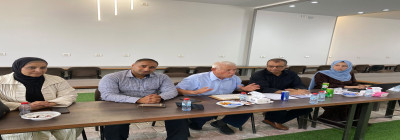
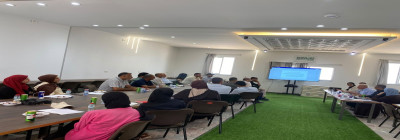
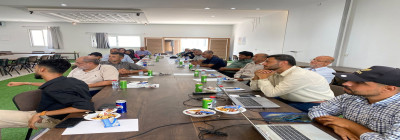
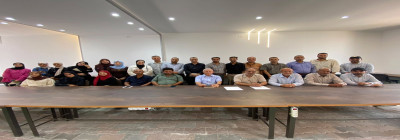
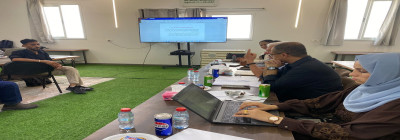
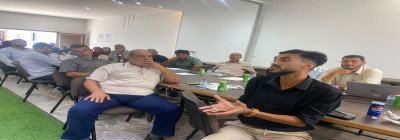
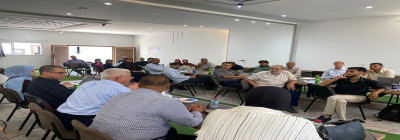
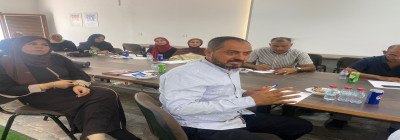
Khan Younis – Gaza University organized a workshop on exploring the needs of professional sectors for reconstruction and the skills required for the post-crisis phase. This workshop was part of the Palestinian Youth Skills Week 2026, organized by the Jehood Foundation for Community and Rural Development in partnership with the Palestinian Ministry of Labor. The workshop was held in person at the university campus of the Scientists Without Borders organization and also online via Google Meet. Attendees included the President of the University, Professor Hassan Abu Jarad; the Vice President for Academic Affairs, Dr. Tariq Abu Hujair; Mr. Rabah Al-Masri, representing the Ministry of Labor; Mr. Abdul Wahab Al-Katri, representing the Jehood Foundation; and a group of academics and university graduates.
Professor Hassan Abu Jarad, the University President, emphasized the importance of investing in the future of young people and empowering them to meet the demands of the modern labor market. He expressed his gratitude to everyone who contributed to organizing and ensuring the success of the workshop, specifically thanking the Ministry of Labor, the Jehood Foundation, and Scientists Without Borders.
Dr. Hatem Al-Asouli, Dean of the Faculty of Communication and Languages at the university, spoke about the realities and challenges of higher education in Palestine: the stagnation of curricula and the changing demands of the labor market. He presented a strategic vision for development and overcoming institutional bureaucracy amidst the crises and for rebuilding the education sector in Gaza.
Meanwhile, Dr. Samia Abdel Moneim presented a paper on the mechanisms universities use to bridge the gap between the demands of the modern era, such as digitalization, innovation, entrepreneurship, digital media, and others, and to enhance the skills of students and young graduates in Gaza towards a viable and sustainable economy, given the surrounding obstacles and circumstances.
The workshop concluded with a set of recommendations, most notably: establishing a national platform to anticipate future professional needs, in which all relevant parties participate (Ministry of Labor, Ministry of Higher Education and Scientific Research, universities, unions, civil society organizations), developing academic programs according to the needs of the digital economy, integrating artificial intelligence into all university programs, in addition to establishing centers for innovation and entrepreneurship within universities, focusing on vocational and technical education, business incubators and learning based on real applied projects, moving from the philosophy of granting academic degrees to building direct competencies and skills, in addition to reforming accreditation governance, creating a fast track for the accreditation of new specializations, and delegating greater powers to university councils.